
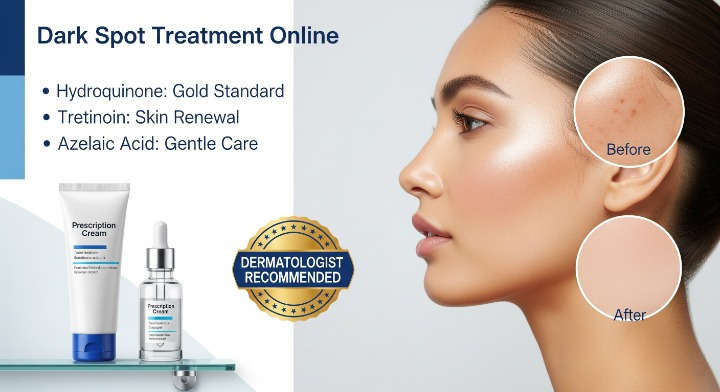
Dark Spot Treatment Online: Top Prescription Options That Dermatologists Use
Dark spots have a quiet way of showing up and staying longer than expected.
Sometimes they appear after acne. Sometimes from sun exposure. And sometimes, they seem to develop without a clear reason at all.
At first, they may not feel like a big concern. But over time, as they become more visible, they can affect how your skin looks and how you feel about it.
That’s usually when people start searching for solutions.
And more often than not, they discover that simple over-the-counter products don’t always give the results they were hoping for.
This is where prescription treatments and now online dermatology come into the picture.
Understanding Why Dark Spots Happen
Dark spots, also known as hyperpigmentation, occur when the skin produces excess melanin.
This can happen for several reasons:
• Sun exposure
• Acne or skin inflammation
• Hormonal changes (like melasma)
• Skin injuries or irritation
In many cases, the deeper the pigmentation, the harder it is to treat with basic skincare products.
That’s why dermatologists often recommend targeted treatments.
Why Online Treatment Is Becoming More Common
Access to dermatological care has changed.
Instead of waiting weeks for an appointment, many people now turn to online consultations.
Through telehealth, you can:
• Share your skin concerns
• Receive a personalized diagnosis
• Get prescription-strength treatments
This approach is not just convenient it also allows for more tailored care.
And when it comes to dark spots, personalization matters.
The Most Effective Prescription Treatments
Dermatologists typically rely on a few well-studied ingredients when treating hyperpigmentation.
Each one works in a slightly different way.
Hydroquinone: The Gold Standard
Hydroquinone is often considered the most effective topical treatment for dark spots.
It works by reducing melanin production in the skin, which helps fade discoloration over time.
Because of its strength, it is usually prescribed in controlled concentrations and used for limited periods.
When used correctly, it can significantly improve stubborn pigmentation.
Tretinoin: Supporting Skin Renewal
Tretinoin plays a different but equally important role.
Instead of directly reducing pigment, it increases skin cell turnover. This helps the skin shed pigmented cells more quickly and replace them with new ones.
Over time, this leads to:
• Brighter skin
• Smoother texture
• More even tone
It’s often used alongside other treatments for better results.
Azelaic Acid: A Gentler Alternative
For those with sensitive skin, azelaic acid is often recommended.
It helps reduce pigmentation while also calming inflammation.
Some studies suggest it can be as effective as stronger treatments for certain types of pigmentation, especially melasma.
It’s a good option for people who cannot tolerate more aggressive treatments.
Combination Therapy: Why Doctors Prefer It
In many cases, dermatologists don’t rely on just one ingredient.
Instead, they combine treatments to improve results.
For example:
• Hydroquinone reduces pigment production
• Tretinoin increases skin turnover
• Additional ingredients help reduce irritation
This combination approach is often more effective than using a single treatment alone.
Some prescription creams even include multiple active ingredients in one formula.
Why Some Treatments Work Better Than Others
Not all dark spots are the same.
Some sit closer to the surface, while others are deeper in the skin.
That’s why results can vary.
Dermatologists often choose treatments based on:
• The cause of pigmentation
• Skin type
• Sensitivity level
• Duration of the condition
A personalized plan tends to produce better, more consistent results.
What to Expect From Treatment
One of the most important things to understand is that dark spot treatment takes time.
Most prescription treatments work gradually.
You may notice:
• Early improvement in a few weeks
• More visible changes in 6 to 12 weeks
Consistency plays a major role here.
Stopping treatment too early can slow progress.
The Role of Sun Protection
Even the most effective treatment won’t work properly without sun protection.
Sun exposure can:
• Darken existing spots
• Trigger new pigmentation
• Reverse progress
That’s why dermatologists always recommend daily sunscreen.
It’s not just an add on it’s part of the treatment itself.
What to Be Careful About
While prescription treatments are effective, they need to be used carefully.
Some common mistakes include:
• Using too much product
• Combining too many active ingredients
• Skipping sunscreen
• Expecting fast results
Hydroquinone, for example, should be used under supervision, as improper use can lead to irritation or unwanted effects.
Following a structured plan makes a big difference.
When Online Treatment Makes Sense
Online dermatology works well when:
• You have mild to moderate pigmentation
• You want a guided treatment plan
• You prefer convenience
However, for more severe cases, in person evaluation may still be necessary.
The key is choosing a reliable service that focuses on proper diagnosis not just selling products.
A More Balanced Approach to Skin
Dark spots can feel frustrating, especially when they take time to fade.
But they are also one of the most treatable skin concerns with the right approach.
Instead of trying multiple random products, a more focused plan tends to work better.
And that’s where prescription treatments stand out.
Final Thoughts
Dark spot treatment has come a long way.
With the help of online consultations, accessing dermatologist-recommended solutions is now easier than ever.
But the most important part is not just what you use it’s how you use it.
A thoughtful approach includes:
• The right treatment
• Consistent use
• Daily sun protection
• Patience
Because real skin improvement doesn’t happen overnight.
It happens gradually, with care and consistency.
And when you follow that process, the results feel more natural and more lasting.