
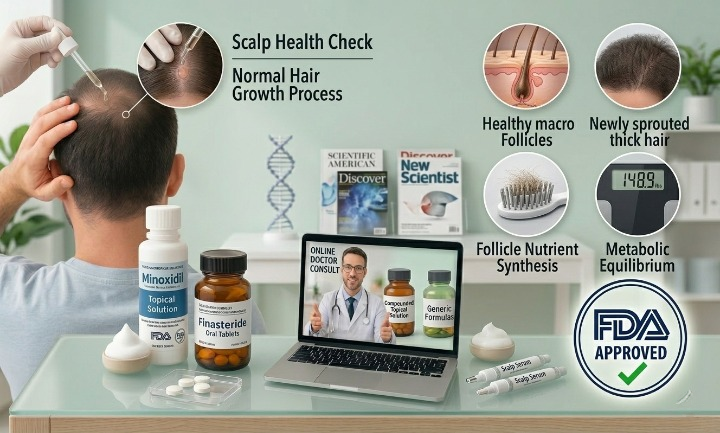
FDA-Approved Hair Loss Treatment Online: What Works and What to Avoid
Hair loss is more common than most people think. For some, it starts gradually a few extra strands in the shower or a thinner hairline. For others, it becomes noticeable almost overnight. Either way, it often leads to the same question:
What actually works and what should you avoid?
With so many treatments available online, the answer is not always clear. Many products promise fast results, but very few are backed by real medical evidence. That’s why understanding FDA-approved options is important. These treatments are tested for safety and effectiveness, making them a more reliable place to start.
At the same time, recent warnings have raised concerns about certain online products, especially compounded medications. So before choosing any treatment, it helps to know the difference between what is proven and what is risky.
Understanding Hair Loss: Why It Happens
Hair loss is not a single condition. It can happen for many reasons, including stress, hormonal changes, nutritional deficiencies, or underlying health issues.
However, the most common cause is androgenetic alopecia, also known as pattern hair loss. This condition is influenced by genetics and a hormone called DHT (dihydrotestosterone). Over time, DHT shrinks hair follicles, making hair thinner until growth eventually stops.
Because of this, effective treatments usually focus on one of two goals:
• Stimulating hair growth
• Blocking or reducing DHT
The most reliable treatments do one or both of these.
FDA Approved Treatments That Actually Work
When a treatment is FDA-approved, it means it has gone through clinical testing for both safety and effectiveness. In the case of hair loss, there are only two primary FDA-approved medications for pattern hair loss.
Let’s look at them in detail.
1. Minoxidil (Topical Treatment)
Minoxidil is widely used and easily available without a prescription. It comes as a liquid or foam and is applied directly to the scalp.
It works by improving blood flow to the hair follicles and extending the hair growth phase. Over time, this can help make hair thicker and slow down further loss.
One of the biggest advantages of minoxidil is its accessibility. It is simple to use and suitable for both men and women.
However, results take time. Most people need at least 3 to 6 months of consistent use before noticing improvement. If the treatment is stopped, hair loss may resume.
Side effects are usually mild and may include scalp irritation or dryness.
2. Finasteride (Oral Medication)
Finasteride works differently. Instead of stimulating growth directly, it targets the hormone responsible for hair loss.
It blocks the conversion of testosterone into DHT, helping to protect hair follicles from shrinking. This makes it especially effective for men with pattern baldness.
Finasteride is available by prescription and has been approved for many years in oral form.
Like any medication, it comes with potential side effects. Some users report reduced libido, fatigue, or mood changes. However, not everyone experiences these, and many tolerate the medication well.
3. Combination Therapy
In clinical practice, doctors often recommend using both treatments together.
• Minoxidil helps stimulate growth
• Finasteride helps prevent further loss
This combined approach tends to produce better results than using either treatment alone.
Still, outcomes vary from person to person, and consistency remains key.
What to Avoid: Risks of Unapproved Online Treatments
The convenience of online treatment has made hair loss solutions more accessible than ever. But it has also introduced new risks.
One of the biggest concerns today is the rise of compounded hair loss products, especially topical finasteride.
The Issue with Compounded Finasteride
Compounded medications are custom-made formulas prepared by pharmacies. They are often marketed as advanced or personalized solutions.
However, there is a critical point many people overlook:
Compounded drugs are not FDA-approved.
This means their safety, effectiveness, and quality are not evaluated in the same way as approved medications.
Even more important, there is no FDA-approved topical version of finasteride available today.
FDA Safety Concerns
The FDA has issued warnings about compounded topical finasteride due to reported adverse effects.
Between 2019 and 2024, multiple cases were reported involving symptoms such as:
• Erectile dysfunction
• Anxiety and depression
• Brain fog
• Fatigue and insomnia
• Decreased libido
In some cases, these symptoms continued even after stopping the treatment.
Another concern is that many users were not fully informed about these risks before starting the product.
Additional Risks to Consider
Compounded topical treatments may also lead to:
• Skin irritation, redness, or burning
• Inconsistent dosing and quality
• Accidental transfer to others through skin contact
• Unknown long-term safety
Because these products vary from one pharmacy to another, there is no standard formula or guarantee of results.
Why Online Convenience Can Be Misleading
Online platforms have made it easier than ever to access treatment. In many cases, you can complete a short questionnaire and receive medication without a detailed medical evaluation.
While this may seem efficient, it can also lead to problems.
Some platforms may:
• Simplify the diagnosis process
• Understate potential side effects
• Promote unapproved combinations
• Focus more on convenience than long-term safety
This does not mean all online services are unsafe. But it does mean that users need to be more informed and cautious.
How to Choose the Right Treatment
If you are considering hair loss treatment online, a careful approach can help you avoid unnecessary risks.
1. Choose FDA-Approved Options
Start with treatments that have been clinically proven tested treatments. This provides a stronger foundation for safety and results.
2. Avoid Overpromising Products
Hair regrowth takes time. Any product that promises instant results should be approached with caution.
3. Understand What You Are Using
Always check the ingredients and formulation. If something is compounded, ask questions about its safety and approval status.
4. Consult a Qualified Professional
Even in an online setting, proper medical advice matters. A licensed healthcare provider can help determine the right approach based on your condition.
5. Stay Consistent
Hair loss treatments are long-term solutions. Stopping early often leads to losing progress.
Setting Realistic Expectations
One of the most important aspects of hair loss treatment is understanding what is realistically possible.
FDA approved treatments:
• Can slow or stop hair loss
• May improve thickness and density
• Require ongoing use
However, they are not instant solutions, and they may not fully restore lost hair in every case.
The goal is often management, not perfection.
Final Thoughts
Hair loss can feel overwhelming, especially with so many options available online. But not all treatments are equal.
FDA approved medications like minoxidil and oral finasteride remain the most reliable choices. They are supported by clinical research and have a well-understood safety profile.
At the same time, newer online treatments especially compounded products should be approached carefully. The lack of regulation and recent FDA warnings highlight the importance of informed decision-making.
In the end, the best approach is simple:
• Focus on proven treatments
• Be cautious with unapproved options
• Prioritize long-term safety over quick results
Because when it comes to your health, clarity and consistency matter more than trends.