
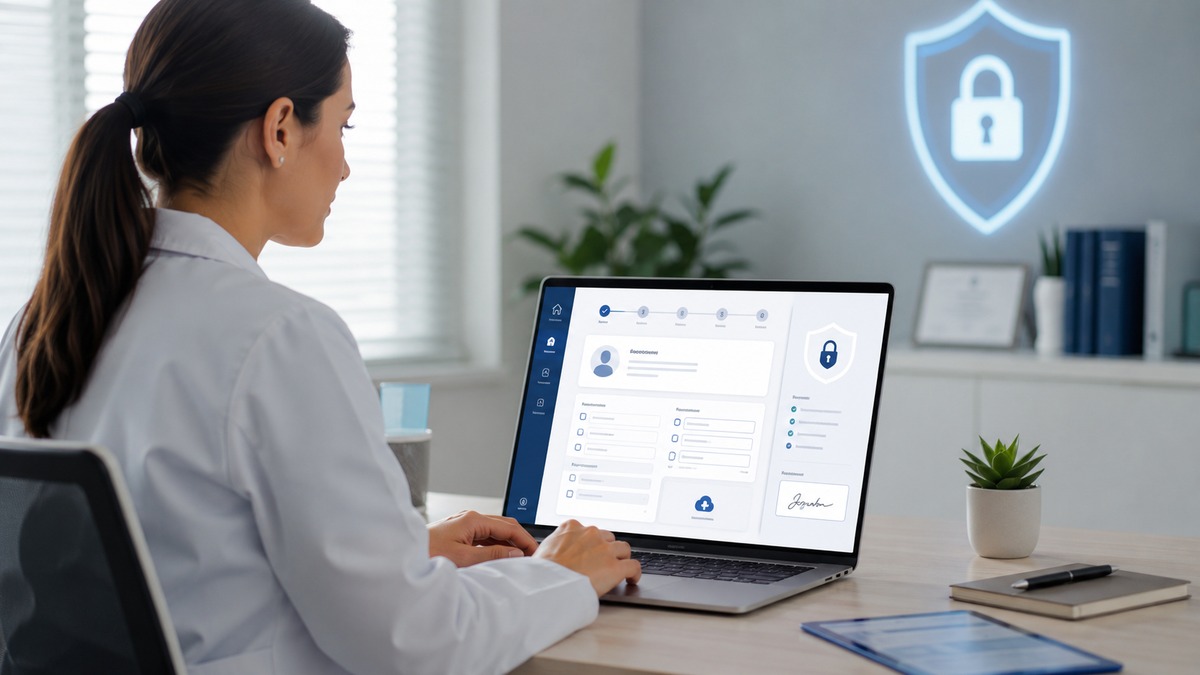
Why HIPAA-Compliant Online Forms Matter for Safe Digital Healthcare
Digital healthcare has made many parts of medical care easier. Patients can book appointments online, speak with providers through telehealth, request refills, upload documents, and complete forms before a visit.
This saves time for both patients and healthcare teams. It can also reduce paperwork, improve communication, and make the care process smoother.
But healthcare data is private. A simple online form can collect very sensitive details. This may include a patient’s name, contact information, date of birth, symptoms, medication history, insurance details, medical records, and personal health concerns.
That is why HIPAA-compliant online forms matter.
They are not just digital forms. They are tools designed to help protect patient information while still making healthcare easier to manage. For clinics, telehealth providers, and digital health platforms, secure forms are an important part of safe online care.
What Are HIPAA-Compliant Online Forms?
HIPAA-compliant online forms are digital forms that are built to protect patient health information. HIPAA stands for the Health Insurance Portability and Accountability Act. In simple terms, it sets rules for how certain healthcare information should be protected.
When a patient fills out an online form, that information may become protected health information, often called PHI. This can include details that connect a person’s identity with their health condition, treatment, payment, or care.
A regular contact form is not always designed to protect this kind of information. It may send data through email, store it without proper safeguards, or allow too many people to access it.
A HIPAA-compliant form is different. It should use secure technology, limit access, protect data during transfer and storage, and support proper recordkeeping.
The goal is simple: patients should be able to share health information online without unnecessary risk.
Why Online Forms Are Common in Digital Healthcare
Online forms are now used in many parts of healthcare. Patients may complete intake forms before a first visit. They may sign consent forms, upload insurance cards, describe symptoms, or answer medical history questions.
In telehealth, online forms are even more important. They often help providers understand the patient before the visit begins. A provider may review symptoms, allergies, medications, and health goals before recommending care.
Forms also help staff work more efficiently. Instead of reading handwriting or entering paper forms by hand, teams can receive clean digital information. This can reduce mistakes and save time.
Patients also benefit. They can complete forms from home instead of rushing through paperwork in a waiting room.
Still, convenience should not come at the cost of privacy. If forms collect health information, they need strong safeguards.
Patient Trust Starts With Privacy
Patients are more likely to share honest information when they feel safe. This matters because accurate information helps providers make better decisions.
If a patient is worried that their information may be exposed, they may leave out important details. They may avoid mentioning symptoms, medications, mental health concerns, sexual health questions, or past conditions.
This can affect care.
HIPAA-compliant online forms help build trust. They show patients that the healthcare provider takes privacy seriously. When patients know their information is handled carefully, they may feel more comfortable sharing what the provider needs to know.
Trust is not only about words on a website. It is also about how the system works behind the scenes.
What Kind of Information Needs Protection?
Many online healthcare forms collect sensitive information. This can include:
- Patient name and contact details
- Date of birth
- Medical history
- Current symptoms
- Medication list
- Allergies
- Insurance information
- Uploaded documents
- Lab reports
- Consent forms
- Payment related details
Some forms may also collect information about mental health, sexual health, chronic conditions, or other personal skin concerns.
This information can be harmful if it is exposed or misused. It can lead to embarrassment, stress, identity theft, insurance issues, or loss of trust in the provider.
That is why healthcare forms should be treated differently from normal website forms. A basic form builder may be fine for a newsletter signup, but it may not be enough for patient data.
Security Is More Than a Password
Some people think a form is secure if it has a password or a login screen. That is a good start, but it is not enough.
HIPAA-compliant online forms should protect information at different stages. They should protect data when the patient submits it. They should protect it while it is stored. They should also control who can view, download, or export it.
Security may include encryption, access controls, audit logs, secure hosting, and user permissions.
Encryption helps make data unreadable to people who should not see it. Access controls help make sure only approved staff can open patient information. Audit logs can show when information was viewed, changed, downloaded, or shared.
HIPAA Vault explains that compliant online forms should address how PHI is handled at every stage, including encryption, access controls, audit trails, secure uploads, and business associate agreements.
Why Business Associate Agreements Matter
A Business Associate Agreement, often called a BAA, is an important part of HIPAA compliance.
Healthcare providers often use outside companies for technology. This may include form builders, hosting providers, email tools, cloud storage, or software platforms. If those companies handle protected health information, they may need to sign a BAA.
A BAA explains each party’s responsibilities for protecting patient information.
If a form vendor refuses to sign a BAA, that is a serious warning sign. A platform may say it is secure or “HIPAA-ready,” but without the right agreement and safeguards, it may not be suitable for collecting patient information.
Healthcare teams should ask about this before using any form tool for patient data.
Safe Forms Help Reduce Errors
HIPAA-compliant online forms are not only about privacy. They can also improve accuracy.
Paper forms can be hard to read. Patients may skip questions. Staff may enter the wrong information into a system. A small typo in a medication name, allergy, or date of birth can create confusion.
Digital forms can reduce some of these problems. They can include required fields, dropdowns, checkboxes, and clear instructions. They can also guide patients through the form step by step.
For example, a form can ask follow-up questions only when needed. If a patient says they have an allergy, the form can ask what type of allergy. If they say they take medication, it can ask for the name and dose.
This helps providers get more complete information before care begins.
Online Intake Forms Can Save Time
Healthcare teams often spend a lot of time collecting and organizing patient information. When forms are completed online, staff may spend less time scanning paper, entering data, or calling patients for missing details.
This can make the visit smoother.
Patients can complete intake forms before the appointment. Providers can review information earlier. Staff can prepare records, check insurance, and organize documents before the patient arrives or joins a telehealth visit.
This is especially helpful for busy clinics and digital healthcare services.
A smoother intake process can also make the patient experience better. People do not want to repeat the same information again and again. A well-designed form can make the process feel easier and more respectful.
Mobile Friendly Forms Matter
Many patients use phones for healthcare tasks. They may book visits, answer messages, upload photos, or complete forms from a mobile device.
If an online form is not mobile-friendly, patients may struggle to finish it. Small text, hard-to-click buttons, and confusing layouts can cause frustration.
A good healthcare form should work well on phones, tablets, and computers. It should be easy to read and simple to complete.
Mobile-friendly forms can also reduce delays. Patients can fill them out at a convenient time instead of waiting until they are at the clinic.
For telehealth, this is very useful. A patient may complete a form, upload a photo, and join a visit all from the same device.
Secure Uploads and E-Signatures
Many healthcare forms need more than text answers. Patients may need to upload insurance cards, lab results, medical records, ID documents, or photos related to their condition.
Some forms also need signatures. These may include consent forms, privacy notices, treatment agreements, or payment approvals.
These uploads and signatures must be protected too.
A secure form system should not treat uploaded documents as normal attachments. They may contain protected health information. They need encryption, access controls, and safe storage.
E-signatures should also be handled carefully. The system should show who signed, when they signed, and what they agreed to.
This helps protect both the patient and the provider.
Why Generic Forms Can Be Risky
Many general form tools are easy to use, but they may not be right for healthcare data. Some tools may send form responses to regular email. Others may store data in a way that does not meet healthcare privacy needs.
A generic form may be fine for asking website visitors to request a callback. But if the form asks about symptoms, diagnoses, medication, insurance, or treatment, it may need HIPAA safeguards.
Healthcare providers should be careful with free or low-cost form tools. The issue is not only the design of the form. It is also where the data goes after the patient clicks submit.
The form may look simple on the front end, but the back end matters more.
What Healthcare Teams Should Look For
Before choosing an online form platform, healthcare teams should look for clear signs of security and compliance.
They should ask whether the platform is built for healthcare data. They should confirm whether the vendor will sign a BAA. They should ask how data is encrypted, who can access it, and whether audit logs are available.
They should also check whether the form supports secure uploads, e-signatures, mobile use, and role-based permissions.
A good form system should also make the patient experience simple. Security should not make the form confusing. The best forms protect data while still being easy to complete.
Patients Also Play a Role
Providers and technology platforms carry most of the responsibility for protecting patient data. But patients can also take simple steps.
They can complete forms on a personal device instead of a public computer. They can avoid public Wi-Fi when sharing health information. They can check that the website looks official and secure before entering personal details.
Patients should also be careful with links in emails or text messages. If a link looks strange, it is safer to visit the provider’s website directly or contact the office.
These small habits can help protect private health information.
HIPAA Forms and the Future of Digital Care
Digital healthcare will continue to grow. More patients are using telehealth, online scheduling, digital prescriptions, remote monitoring, and patient portals.
As care moves online, forms will remain an important part of the process. They are often the first place where patients share personal health information.
That makes secure forms a basic need, not an extra feature.
HIPAA-compliant online forms help healthcare organizations offer digital care in a safer way. They protect privacy, support better records, reduce manual work, and improve the patient experience.
They also remind patients that their information matters.
Final Thoughts
HIPAA-compliant online forms are important for safe digital healthcare. They help patients share sensitive information with more confidence. They also help healthcare teams collect, store, and manage data more responsibly.
A good form does more than collect answers. It protects patient privacy, supports accurate care, and creates a smoother experience from the start.
For healthcare providers, secure forms are part of building trust. For patients, they offer peace of mind.
Digital healthcare should be convenient, but it should also be careful. HIPAA-compliant online forms help make both possible.