
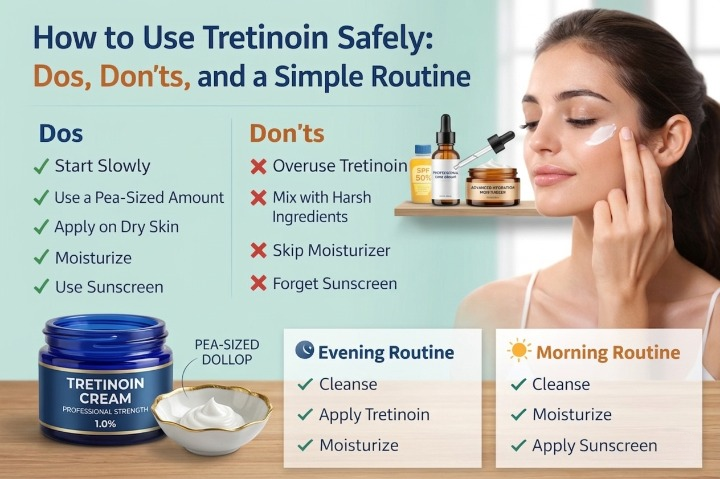
How to Use Tretinoin Safely: Dos, Don’ts, and a Simple Routine
Tretinoin is often hailed as one of the most effective treatments available for a variety of skin concerns. Whether you’re battling acne, trying to reduce fine lines and wrinkles, or aiming for a more even skin tone, tretinoin is often recommended by dermatologists as the go to solution.
But despite its remarkable benefits, using tretinoin correctly can be tricky. It’s a potent ingredient that requires proper care to avoid irritation and achieve the best results.
In this guide, we’ll break down everything you need to know about using tretinoin safely, from the essential dos and don’ts to a simple, easy to follow routine that will help you incorporate it into your daily skincare regimen.
What is Tretinoin?
Tretinoin, a form of vitamin A, is a powerful retinoid that promotes skin cell turnover. By increasing the speed at which your skin sheds old, damaged cells, tretinoin reveals fresh, new skin underneath.
This action helps treat a variety of skin issues, including:
• Acne: By preventing clogged pores
• Fine lines and wrinkles: By stimulating collagen production
• Hyperpigmentation: By speeding up the skin’s ability to replace damaged cells
• Uneven skin texture: By smoothing the skin’s surface over time
While tretinoin works on multiple skin concerns, it is essential to use it safely, as it can cause irritation if introduced too quickly or applied incorrectly.
How Tretinoin Works: The Science Behind the Magic
Tretinoin works by speeding up the process of skin renewal. Typically, your skin naturally sheds dead cells to make room for new, healthy cells. Tretinoin accelerates this process, so old skin cells are sloughed off more rapidly, and new skin emerges faster.
Additionally, tretinoin boosts collagen production, which helps improve the firmness and elasticity of your skin. This is why it’s effective for both treating acne and combating the early signs of aging, such as fine lines and wrinkles.
The Dos: Best Practices for Safe Use
Tretinoin can be transformative, but you need to start slow and follow a careful routine to minimize irritation and maximize results.
Here are the essential dos to keep in mind:
1. Start Slowly
The most crucial rule for using tretinoin is to start slowly. When beginning tretinoin, applying it every night is not a good idea. Start with 2–3 times a week and gradually increase the frequency as your skin builds tolerance.
This slow approach helps your skin adjust to the product without experiencing too much irritation.
2. Use a Pea-Sized Amount
A little goes a long way when it comes to tretinoin. Using a small, pea sized amount is sufficient for the entire face. More is not better and can lead to increased irritation and dryness.
Dot the tretinoin onto your forehead, cheeks, chin, and nose, and then gently spread it across your face.
3. Apply It on Dry Skin
Tretinoin should be applied to completely dry skin. After washing your face, wait at least 15–20 minutes to let your skin dry thoroughly before applying tretinoin.
Applying tretinoin on damp skin can increase the likelihood of irritation and sensitivity. The dry application also ensures the tretinoin is absorbed effectively.
4. Follow with Moisturizer
Moisturizing is key when using tretinoin. The product can cause dryness, flakiness, and tightness, especially in the beginning. To keep your skin hydrated, apply a moisturizer after tretinoin.
A gentle, hydrating moisturizer will help reduce irritation and keep your skin barrier intact, which is essential when using tretinoin.
5. Never Skip Sunscreen
This is non-negotiable. Tretinoin increases your skin's sensitivity to the sun, which makes it more prone to sunburn and pigmentation. Therefore, sunscreen should be a part of your daily routine.
Apply a broad-spectrum sunscreen with SPF 30 or higher every morning, even on cloudy days or when you are indoors. Sun protection will help prevent further damage and allow you to enjoy the benefits of tretinoin without exposing your skin to additional harm.
The Don’ts: Things to Avoid While Using Tretinoin
Even though tretinoin is highly effective, improper use can lead to irritation or dryness.
Here are some things you should avoid:
1. Don’t Overuse Tretinoin
It’s tempting to think that using tretinoin every night will give you faster results, but this is not the case. Overuse can lead to severe dryness, peeling, and redness.
By starting slow and gradually increasing usage, you allow your skin to adjust and avoid overwhelming it.
2. Don’t Mix with Harsh Ingredients
While tretinoin is powerful, mixing it with other strong skincare products can make your skin more sensitive.
Avoid combining tretinoin with:
• AHA/BHA exfoliants
• Vitamin C
• Physical scrubs
These can irritate your skin, especially when used at the same time as tretinoin. If you want to include exfoliating acids or vitamin C in your routine, do so on alternate days.
3. Don’t Skip Moisturizer
Tretinoin can be drying, and skipping moisturizer is a mistake that can leave your skin feeling tight and uncomfortable. A good moisturizer helps prevent irritation and keeps your skin balanced.
Look for a gentle, hydrating moisturizer that won’t clog pores and will support your skin’s natural barrier function.
4. Don’t Forget Sunscreen
We can’t emphasize this enough never skip sunscreen while using tretinoin. Tretinoin makes your skin more vulnerable to UV damage, and without sunscreen, you risk causing further harm to your skin.
A Simple Routine for Tretinoin Beginners
For best results, follow a simple and straightforward routine to minimize irritation and keep your skin nourished.
Morning Routine:
1. Cleanse: Use a gentle, non-stripping cleanser to wash away impurities.
2. Sunscreen: Apply broad-spectrum sunscreen (SPF 30 or higher).
Evening Routine:
1. Cleanse: Wash your face to remove makeup and any residue.
2. Wait for Skin to Dry: Give your skin 15–20 minutes to dry completely before applying tretinoin.
3. Tretinoin: Apply a pea-sized amount to your face and gently spread it evenly.
4. Moisturize: Lock in moisture with a gentle, hydrating moisturizer.
What to Expect in the First Few Weeks
When you begin using tretinoin, you may experience mild dryness, redness, or peeling. This is common and part of the adjustment period. Your skin is getting used to the active ingredient, and the irritation should subside within a few weeks.
You may also notice that your skin initially worsens, which is referred to as a “purge phase.” This happens because tretinoin is pushing impurities to the surface. After this period, your skin will start to clear up.
When to Consult a Professional
If you experience severe irritation, discomfort, or if your skin does not adjust after a few weeks, consult a dermatologist. A professional can help determine whether you need to adjust the frequency, strength, or combine tretinoin with other treatments for better results.
Final Thoughts
Tretinoin is one of the most effective tools in skincare for acne, aging signs, and dark spots. However, it’s crucial to use it correctly. By following a gradual approach and sticking to a simple routine, you can achieve healthier, clearer, and smoother skin.
Consistency, patience, and proper care are the keys to successful tretinoin use. By respecting your skin’s needs, you can enjoy long term benefits without irritating or overwhelming your complexion.