
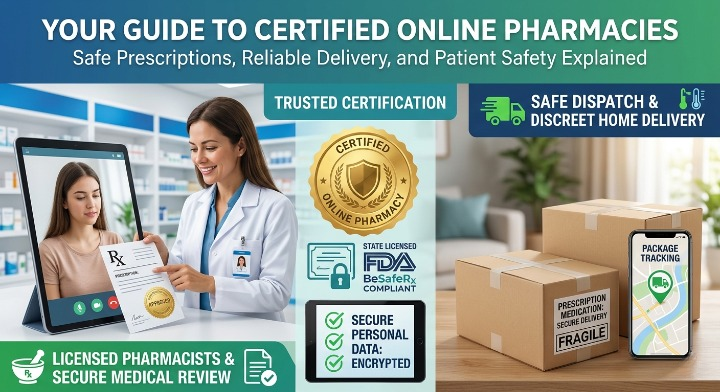
Certified Online Pharmacy Explained: Safe Prescriptions and Reliable Delivery
Buying medicine online has become normal for many people. It can save time, protect privacy, and make care easier to manage from home. For someone with a busy schedule, limited mobility, or a private health concern, an online pharmacy can feel like a simple solution.
But not every online pharmacy is safe.
Some websites look professional, but they may sell unsafe, fake, expired, or unapproved medicine. Others may offer prescription drugs without asking for a valid prescription. That may seem convenient at first, but it can put a patient’s health at risk.
This is why choosing a certified online pharmacy matters. A safe pharmacy does more than ship medicine. It checks prescriptions, protects patient information, uses licensed professionals, and makes sure medicine is handled with care.
This article explains what a certified online pharmacy is, how safe prescriptions work, what reliable delivery should look like, and what patients should check before ordering medicine online.
What Is a Certified Online Pharmacy?
A certified online pharmacy is a pharmacy that follows legal and safety standards for selling medicine online. It should be licensed, require valid prescriptions, and provide access to a licensed pharmacist when patients have questions.
The main goal is patient safety.
A trusted online pharmacy should not simply sell medicine to anyone who clicks “buy now.” It should make sure the medicine is appropriate, legal, and safe for the patient.
For prescription medicine, this means the patient must have a valid prescription from a licensed healthcare provider. The pharmacy should check that prescription before filling the order.
A safe online pharmacy should also give clear information about the medicine, including how to take it, possible side effects, and when to contact a healthcare provider.
The FDA warns that some unsafe online pharmacies claim to sell prescription drugs at very low prices and may not require a prescription. These websites may sell fake, expired, or unsafe medicine outside the safety rules followed by licensed pharmacies.
Why Certification and Licensing Matter
Licensing is important because medicine is not like a regular online product. A wrong medicine, wrong dose, or poor storage can cause serious problems.
A licensed pharmacy must follow rules for storing, dispensing, labeling, and shipping medicine. These rules help protect patients.
Certification or proper licensing also gives patients a way to check if the pharmacy is real. In the United States, safe online pharmacies should be licensed by a state board of pharmacy. They should also provide a physical U.S. address and a telephone number.
A pharmacy that hides its location or does not show license details should raise concern.
Patients should be able to confirm where the pharmacy operates and who is responsible for handling the medicine. If this information is missing, it is better to be careful.
A certified online pharmacy should make trust easy. Patients should not have to guess whether the business is real.
Safe Prescriptions Start With Proper Review
A safe prescription starts before the medicine is shipped. A licensed healthcare provider should review the patient’s condition and decide whether the medicine is right.
This may happen through an in-person visit, a telehealth visit, or a secure online medical review. The process may vary, but the goal is the same: the provider needs enough information to make a safe decision.
Patients may be asked about symptoms, medical history, allergies, current medications, and health conditions. These questions are important. They help the provider avoid unsafe treatment choices.
For example, some medicines can interact with other drugs. Some may not be safe for people with heart problems, high blood pressure, liver disease, kidney disease, pregnancy, or certain allergies.
A real prescription should not be treated as a formality. It is part of patient protection.
If an online pharmacy offers prescription medicine without asking for a doctor’s prescription, that is a warning sign. The FDA lists “not requiring a doctor’s prescription” as one of the signs of an unsafe online pharmacy.
The Role of a Licensed Pharmacist
A licensed pharmacist is an important part of safe online pharmacy care. Pharmacists do more than prepare orders. They help check medicine safety, answer patient questions, and explain how medication should be used.
Patients may need help understanding the dose, timing, side effects, or possible interactions. A pharmacist can also explain what to do if a dose is missed or if a side effect appears.
A safe online pharmacy should have a licensed pharmacist available to answer questions. If a website does not offer access to a pharmacist, patients should be cautious.
Good pharmacy care should feel supportive. Patients should not receive medicine with no way to ask questions.
Warning Signs of an Unsafe Online Pharmacy
Some unsafe online pharmacies look real. They may use clean websites, professional photos, and medical-sounding language. But a nice-looking website does not always mean the pharmacy is safe.
Patients should be careful if an online pharmacy:
- Does not require a prescription
- Does not show license information
- Does not provide a U.S. address or phone number
- Does not have a licensed pharmacist available
- Offers prices that seem too good to be true
- Ships medicine in damaged or unclear packaging
- Sends medicine that looks different from usual
- Does not protect personal or payment information
- Sells patient information to other websites
- skincare
These signs matter because unsafe medicine can be dangerous.
According to the FDA, some unsafe online pharmacies may sell medicine with too much or too little active ingredient, the wrong active ingredient, or harmful substances. Medicine may also be stored poorly, which can make it less effective or unsafe.
Why Cheap Medicine Can Be Risky
Everyone wants affordable healthcare. Lower prices can help patients stay on treatment and manage their health better. But very deep discounts should be checked carefully.
Some unsafe websites use low prices to attract patients. They may claim to sell the same medicine at a much cheaper price, but the product may not be the same. It could be fake, expired, contaminated, or made without proper safety standards.
A medicine that does not contain the right active ingredient may not treat the condition. A medicine with too much active ingredient may cause side effects. A medicine with the wrong ingredient may lead to serious harm.
This does not mean every affordable online pharmacy is unsafe. It means patients should look beyond the price. Licensing, prescription rules, pharmacist support, and clear contact information are just as important.
Safe medicine should be affordable when possible, but it should never come at the cost of safety.
Reliable Delivery Is Part of Safe Care
Delivery is more than getting a package to the door. For medicine, reliable delivery means the order is filled correctly, packed safely, shipped on time, and protected during transit.
Some medicines need special handling. Others may be sensitive to heat, cold, moisture, or sunlight. A good pharmacy should know how to store and ship medicine properly.
The package should arrive in good condition. It should not be broken, damaged, opened, or missing important details. The medicine should have clear labeling, dosage instructions, expiration dates, and safety information.
If the package looks damaged or the medicine looks different than expected, patients should contact the pharmacy before using it.
Reliable delivery also includes tracking. Patients should know when the medicine is expected to arrive. This helps avoid missed doses and reduces stress.
Privacy and Personal Information
Online pharmacies collect personal details. This may include name, address, date of birth, medical history, prescription details, and payment information. This information must be protected.
A safe online pharmacy should explain how it protects patient data. It should use secure forms and payment systems. It should also have a clear privacy policy.
Patients should avoid websites that do not explain how personal and financial information is protected. The FDA warns that some unsafe pharmacies may not provide clear written protections and may even sell patient information to other websites.
Before placing an order, patients should check if the website uses a secure connection. The web address should begin with “https.” This does not prove the pharmacy is safe by itself, but it is one basic sign of secure communication.
Patients should also avoid ordering medicine over public Wi-Fi when possible. A private home connection or mobile data is usually safer.
Clear Instructions Help Patients Use Medicine Safely
A safe online pharmacy should provide clear instructions with every medication. Patients should understand how to take the medicine before they start using it.
Good medication instructions should explain:
- What the medicine is for
- How much to take
- When to take it
- Whether to take it with food
- What side effects may happen
- What to avoid while using it
- What to do if a dose is missed
- When to contact a healthcare provider
Patients should read these instructions carefully. They should not guess the dose or change how they take medicine without medical advice.
If anything is unclear, they should contact the pharmacist or healthcare provider. Asking questions is part of safe care.
What Patients Should Check Before Ordering
Before using an online pharmacy, patients should take a few simple steps.
First, check if the pharmacy requires a valid prescription. If it does not, that is a warning sign.
Second, look for a physical address and phone number. A trusted pharmacy should not hide basic contact details.
Third, check if a licensed pharmacist is available. Patients should have a way to ask questions.
Fourth, review the privacy policy. The website should explain how personal and payment information is protected.
Fifth, check the pharmacy license. The FDA recommends checking the pharmacy’s license through the state board of pharmacy database or using resources from its BeSafeRx program.
These checks may take a few minutes, but they can prevent serious problems.
What to Do When Medicine Arrives
When the medicine arrives, patients should not use it right away without checking it.
They should look at the package and label. The medicine should match what was prescribed. The name, dose, instructions, and expiration date should be clear.
Patients should also check for damage. If the bottle, box, seal, or packaging looks broken, they should contact the pharmacy.
The medicine should not look strange, smell unusual, or appear different from what the patient normally receives without an explanation. If anything feels wrong, it is safer to ask before using it.
Patients should also keep the medicine in the right place. Some medicines need room temperature storage. Others may need special storage. The label or pharmacist should explain this.
When to Contact a Healthcare Provider
Patients should contact a healthcare provider or pharmacist if they feel unsure about a medicine. They should also reach out if they have side effects, allergic reactions, or symptoms that get worse.
Urgent help may be needed for serious reactions, such as trouble breathing, swelling of the face or throat, chest pain, fainting, severe rash, or confusion.
Patients should not ignore warning signs. Online care should still connect back to real medical support.
Safe pharmacy care does not end when the package arrives. It continues through proper use, follow-up, and support when needed.
Final Thoughts
A certified online pharmacy can make healthcare easier, more private, and more convenient. It can help patients receive medicine without unnecessary travel or long waits. It can also support people who need reliable delivery and clear medication guidance.
But safety should always come first.
Patients should choose online pharmacies that require valid prescriptions, use licensed pharmacists, protect personal information, and provide clear delivery and medication instructions.
A safe online pharmacy does not hide important details. It makes them easy to find.
Before ordering medicine online, patients should take time to check the pharmacy, read the instructions, and ask questions when needed. These simple steps can help protect health, privacy, and peace of mind.