
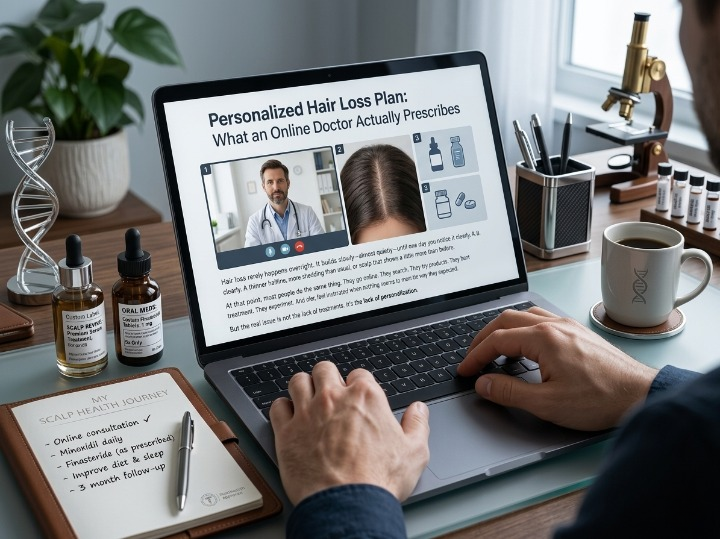
Personalized Hair Loss Plan: What an Online Doctor Actually Prescribes
Hair loss rarely happens overnight. It builds slowly almost quietly until one day you notice it clearly. A thinner hairline, more shedding than usual, or a scalp that shows a little more than before.
At that point, most people do the same thing.
They go online.
They search. They try products. They experiment. And often, they feel frustrated when nothing seems to work the way they expected.
But the real issue is not the lack of treatments.
It’s the lack of personalization.
Hair loss is not a single condition. It is a result of multiple factors working together. That’s why a treatment that works for one person may not work for another.
This is where personalized hair loss plans especially those created by online doctors—are changing the approach completely.
Why One Size Fits All Treatment Fails
Most over-the-counter solutions treat hair loss as if it’s the same for everyone.
But in reality, hair loss can be caused by:
- Genetics (pattern baldness)
- Hormonal imbalance
- Stress and lifestyle factors
- Nutritional deficiencies
- Medical or scalp conditions
Dermatology experts emphasize that effective treatment always begins with identifying the cause.
Without this step, treatment becomes guesswork.
That’s why personalized plans are more effective they focus on your specific condition, not just the symptom.
What Makes an Online Hair Loss Plan “Personalized”?
A personalized plan is not just about prescribing medication.
It’s about understanding your situation from multiple angles and building a treatment strategy around it.
Online doctors now follow a structured process that closely mirrors in-clinic consultations.
Step 1: Detailed Medical Evaluation
The first step is always information.
During an online consultation, a doctor will assess:
- When your hair loss started
- Whether it’s gradual or sudden
- Family history of hair loss
- Lifestyle habits (sleep, stress, diet)
- Current medications or health conditions
This helps create a baseline for diagnosis.
Step 2: Scalp and Hair Pattern Analysis
Most platforms require you to upload clear images of your scalp.
This allows doctors to identify patterns such as:
- Receding hairline
- Crown thinning
- Diffuse shedding
These patterns often indicate specific types of hair loss, especially androgenetic alopecia.
Step 3: Identifying the Root Cause
Based on your data, the doctor determines the underlying cause.
Hair loss is usually classified into:
- Hormonal (DHT-related)
- Temporary (stress-related shedding)
- Medical or nutritional causes
This step is critical because it directly affects the treatment plan.
Step 4: Creating a Tailored Treatment Plan
This is where personalization truly begins.
Instead of recommending a single product, doctors design a combination of treatments based on your needs.
What an Online Doctor Actually Prescribes
Most personalized plans include a mix of clinically proven treatments and supportive care.
1. Minoxidil: Stimulating Hair Growth
Minoxidil is often the first treatment introduced.
It works by improving blood flow to the scalp and extending the growth phase of hair follicles.
This helps:
- Strengthen existing hair
- Increase thickness
- Promote regrowth in thinning areas
However, consistency is essential.
Hair regrowth usually begins within 1 to 6 months, and stopping treatment can reverse progress.
2. Finasteride: Addressing the Root Cause
If your hair loss is driven by hormones, finasteride is often prescribed.
It works by reducing DHT levels, the hormone responsible for shrinking hair follicles.
This helps:
- Slow down hair loss
- Preserve existing hair
- Improve long-term outcomes
Studies and clinical use show that finasteride improves hair retention and can even support regrowth in some cases.
3. Combination Therapy: The Most Effective Strategy
Many online doctors recommend using both treatments together.
- Minoxidil stimulates growth
- Finasteride prevents further damage
This combination approach is widely considered more effective than using either treatment alone.
4. Additional Prescription Options
In some cases, doctors may prescribe additional treatments depending on your condition.
These may include:
- Hormonal medications (for women)
- Anti-inflammatory treatments
- Off-label therapies when needed
Telehealth platforms commonly prescribe medications like finasteride and minoxidil after proper evaluation.
5. Lifestyle and Nutritional Guidance
A good personalized plan goes beyond medication.
Doctors may recommend:
- Improving protein and iron intake
- Managing stress levels
- Correcting sleep patterns
Because lifestyle factors can directly affect hair growth cycles.
6. Ongoing Monitoring and Adjustments
Unlike generic treatments, personalized plans are dynamic.
Doctors:
- Monitor your progress
- Adjust dosages
- Modify treatment based on results
This ongoing care improves long-term success.
Does Online Hair Loss Treatment Actually Work?
Yes but only when done properly.
Modern telehealth platforms combine convenience with medical supervision.
Patients typically:
- Complete an online assessment
- Connect with a licensed doctor
- Receive a customized treatment plan
- Get prescriptions delivered
Many platforms now offer structured care with real medical oversight, making treatment more accessible than ever.
The Risks You Should Be Aware Of
While personalized treatment is effective, not all online services follow proper standards.
Some platforms:
- Skip detailed diagnosis
- Prescribe medication too quickly
- Focus more on sales than patient care
There have also been concerns about side effects when treatments are used without proper supervision.
For example, finasteride can cause side effects in a small percentage of users, including reduced libido or mood changes.
This is why proper medical guidance is essential even online.
What a Good Personalized Plan Should Include
Not all plans are equal.
A high-quality plan should have:
Accurate diagnosis
Understanding the real cause
Evidence-based treatment
Using clinically tested medications
Clear communication
Explaining benefits and risks
Ongoing support
Regular follow-ups and adjustments
What You Should Avoid
When choosing an online hair loss plan, be cautious of:
- Instant or “guaranteed” results
- One-product solutions
- Lack of medical consultation
- Unapproved or experimental treatments
Hair loss is gradual and so is recovery.
Managing Expectations the Right Way
One of the biggest mistakes people make is expecting fast results.
In reality:
- Hair growth takes time
- Visible improvement takes months
- Consistency matters more than speed
Most treatments focus on:
slowing hair loss first, then improving density over time
The Emotional Impact of Hair Loss
Hair loss is not just physical.
It can affect:
- Confidence
- Self-image
- Social interactions
That’s why personalized treatment matters so much.
It gives you a sense of control and a clear direction.
Final Thoughts
A personalized hair loss plan is not about chasing the latest product.
It’s about understanding your condition and treating it with the right strategy.
Online doctors have made this process more accessible by offering:
- Fast consultations
- Tailored treatment plans
- Ongoing support
But the key is choosing a platform that prioritizes real medical care over convenience.
Because in the end, lasting results don’t come from random solutions.
They come from the right plan, guided by expertise, and followed with consistency.