
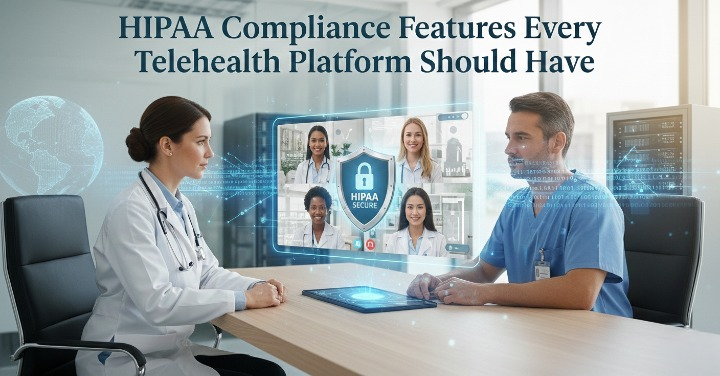
HIPAA Compliance Features Every Telehealth Platform Should Have
The Rapid Growth of Telehealth
Telehealth is changing the way people receive medical care. In the past, every concern required a visit to a clinic. Patients waited in long lines, traveled far, and often delayed care.
Today, many of those visits happen online. A patient can speak to a doctor from home, share reports digitally, and receive treatment without leaving their couch.
This shift has helped both patients and healthcare providers. Care is faster. Access is easier. Costs are often lower. But this growth also creates new responsibility.
As telehealth expands, patient data moves through digital systems more than ever before. That data must stay private and secure.
This is where HIPAA compliance becomes essential.
Many video and messaging tools were built for general use, not healthcare. Healthcare is different. It is regulated. Patient information is sensitive. If a telehealth platform does not follow HIPAA rules, it puts patients, providers, and businesses at risk.
In this blog, we’ll explain the most important HIPAA compliance features every telehealth platform should have, using a clear and practical approach followed by industry leaders.
Why HIPAA Compliance Is Critical
HIPAA compliance is not just about avoiding fines. It is about trust. Patients trust healthcare providers with deeply personal information. That trust must be protected, whether care happens in a clinic or online.
Telehealth changes how data is handled. Medical records, prescriptions, and messages now move across networks, devices, and cloud systems. The HIPAA Privacy Rule and HIPAA Security Rule apply fully to these digital interactions.
If a platform fails to meet HIPAA standards, the consequences can be serious:
• Regulatory audits
• Financial penalties
• Legal action
• Loss of patient confidence
Most importantly, a single data breach can damage a provider’s reputation for years. That is why HIPAA compliance must be built into telehealth platforms from the start.
1. Multi-State License Verification
Telehealth allows providers to treat patients across state lines. While this expands access to care, it also creates compliance challenges. Providers must hold valid licenses in every state where they offer services.
Real-Time Verification
A HIPAA compliant telehealth platform should verify provider licenses in real time. This confirms that a clinician is legally allowed to practice in a specific state before seeing patients.
Real-time checks help prevent:
• Expired licenses
• Restricted providers
• Unapproved cross-state care
Ongoing Monitoring
Licenses can change at any time. A provider may face disciplinary action or lose eligibility. A strong platform monitors license status continuously, not just once a year.
This proactive approach helps catch problems early and reduces the risk of compliance violations.
2. Strong Credentialing and Eligibility Controls
Credentialing confirms that a provider is qualified, trained, and authorized. In telehealth, credentialing also controls system access.
Only verified providers should be able to:
• Log into the platform
• View patient records
• Conduct virtual visits
Credentialing should apply to:
• Doctors and clinicians
• Administrative staff
• Third-party vendors handling patient data
Automated credentialing workflows reduce human error and speed up onboarding. They also create clear access boundaries, which is a core HIPAA requirement.
3. Secure Data Handling and Encryption
HIPAA requires strong safeguards for how patient data is stored and transmitted. These safeguards fall into three areas: administrative, physical, and technical.
Encryption Is Mandatory
All patient data must be encrypted:
• During video calls
• While messages are sent
• When files are stored on servers
Encryption scrambles data so only authorized users can read it. Even if data is intercepted, it remains useless without the proper access keys.
Audit Trails
HIPAA also requires platforms to keep records of system activity. These are known as audit trails.
Audit trails show:
• Who accessed patient data
• When access occurred
• What actions were taken
These records are essential during audits and security reviews. They also help detect unusual behavior early.
4. Privacy for Sensitive Consultations
Telehealth is often used for sensitive health concerns. Many patients prefer virtual care because it feels more private and comfortable.
- Conditions related to mental health, chronic illness, or sexual health are common examples. In these cases, privacy is not optional it is critical.
- A secure telehealth platform allows patients to speak openly from their own space. For example, some men feel more comfortable discussing erectile dysfunction online. They can ask about treatment options, including fast-acting sildenafil, without fear of judgment or exposure.
- When patients feel safe, they are more honest. That honesty leads to better care and better outcomes.
5. Automated Compliance Workflows
As telehealth programs grow, manual compliance processes become risky. Tracking licenses, credentials, and access rights by hand often leads to missed updates and expired approvals.
Automation helps by:
• Monitoring licenses across multiple states
• Flagging credential changes instantly
• Reducing reliance on spreadsheets and emails
Automated workflows create consistency. They also make it easier to prove compliance during audits.
6. Common HIPAA Compliance Mistakes
Even experienced organizations make mistakes. Many issues come from outdated systems or manual processes.
Common mistakes include:
• Tracking licenses manually
• Using non-secure video tools
• Weak password policies
• Ignoring credential updates
• Limited system monitoring
These gaps increase the risk of violations and data breaches. Fixing them early protects both patients and providers.
7. Questions to Ask Telehealth Vendors
Choosing the right telehealth platform is a critical decision. Features alone are not enough. Compliance and security must come first.
Important questions to ask include:
• How do you verify provider licenses across states?
• How is patient data encrypted and stored?
• Do you provide audit reports for HIPAA reviews?
• How often is provider data monitored and updated?
Clear answers show that a vendor understands healthcare compliance. Vague responses are a warning sign.
8. The Importance of Reliable Provider Data
HIPAA compliance depends on accurate data. Providers must be correctly identified, licensed, and monitored.
Using verified data helps organizations:
• Reduce compliance risk
• Scale telehealth programs safely
• Maintain trust with patients and partners
This is why many healthcare organizations rely on trusted verification and monitoring solutions to support their compliance efforts.
9. The Human Side of Compliance
HIPAA is often viewed as a technical requirement, but it is really about people.
IT Protects:
• Patients who expect privacy
• Providers who need secure systems
• Organizations that want to deliver safe care
When compliance is handled properly, everyone benefits. Patients feel confident. Providers focus on care. Organizations grow responsibly.
Final Thoughts on Telehealth Security
Telehealth is not a temporary solution. It is a permanent part of modern healthcare. As adoption grows, regulations will continue to tighten.
Platforms that invest in compliance now will be better prepared for the future. Strong security, verified data, and automation are no longer optional. They are essential.
Conclusion: Trust Is the Foundation
Building a HIPAA compliant telehealth platform takes effort, but it is worth it. Compliance protects patients, strengthens trust, and safeguards businesses from serious risk.
Whether you are offering general care or specialized treatments such as erectile dysfunction support, patient safety must always come first. Secure systems allow providers to deliver high quality care with confidence.
The future of healthcare is digital. Let’s make sure it is also safe, private, and trustworthy.