
How Long Do Hair Loss Treatments Take to Work? A Realistic Timeline
Hair loss treatments often come with a frustrating question: how long will it take before I see results?
Many people start treatment hoping for quick improvement, only to feel discouraged when changes don’t appear immediately. But the truth is that hair growth is a slow biological process. Even the most effective treatments take time to show visible results.
Understanding what happens month by month can help you stay patient and realistic during your hair regrowth journey. In this guide, we’ll walk through a realistic timeline of hair loss treatments and what you can expect along the way.
Why Hair Loss Treatments Take Time
Before diving into the timeline, it helps to understand how hair grows.
Each hair follicle goes through a cycle consisting of three stages:
• Anagen (growth phase) hair actively grows
• Catagen (transition phase) hair growth slows
• Telogen (resting phase) hair stops growing and eventually sheds
This cycle can last several years. Because of this natural rhythm, treatments cannot instantly produce visible hair. They first need to influence the follicle and push it back into the growth phase.
That’s why patience is a key part of any hair loss treatment plan.
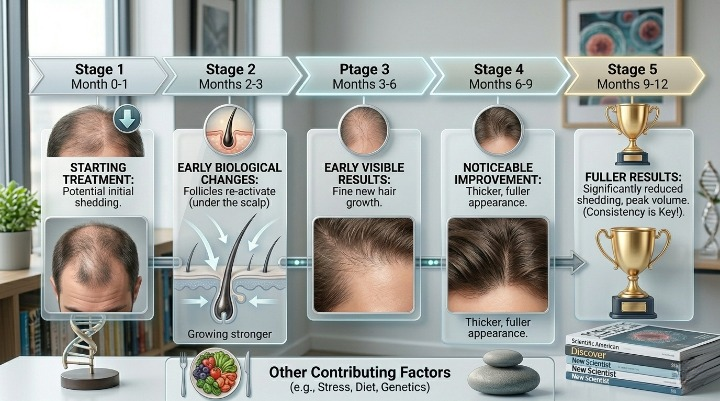
The First Month: Starting Treatment
During the first few weeks of treatment, most people won’t see any visible changes. This is completely normal.
In fact, some treatments may even cause temporary shedding at the beginning. This happens because weak hairs are pushed out as new growth cycles begin.
Although it can feel worrying, early shedding is often a sign that the treatment is beginning to stimulate the follicles.
At this stage, the best thing you can do is stay consistent and follow the treatment instructions carefully.
Months 2 or 3: Early Biological Changes
By the second or third month, subtle changes may start happening beneath the surface.
Hair follicles that were previously inactive may begin transitioning back into the growth phase.
However, this process is still happening under the scalp, so visible improvements may be minimal.
Some people begin noticing:
• Reduced hair shedding
• Slightly stronger hair strands
• Less hair breakage
Even though the changes may be small, this stage is important because it signals that the treatment is beginning to influence the hair growth cycle.
Months 3 to 6: Early Visible Results
For many treatments, the first noticeable improvements appear between three and six months of consistent use.
During this phase, people may start to see:
• Fine new hair growth in thinning areas
• Reduced shedding
• Slightly thicker hair density
For medications like minoxidil, early improvements often begin after several months of regular use, though full benefits take longer to develop.
This stage can feel encouraging because it’s usually the first time people notice visible progress.
Months 6 to 9: Noticeable Improvement
Between six and nine months, improvements often become more visible.
Hair may appear fuller as more follicles remain in the growth phase. The strands themselves may also become thicker and stronger.
At this point, many people report:
• Increased hair density
• Thicker hair strands
• Better coverage in thinning areas
However, results can vary depending on the underlying cause of hair loss. Genetics, hormones, stress, and nutritional deficiencies all affect how quickly hair regrows.
Months 9 to 12: Fuller Results
By the end of the first year, many treatments reach their most noticeable stage.
Full results from many hair loss therapies typically develop within nine to twelve months of consistent treatment.
At this point, improvements may include:
• Significantly reduced hair shedding
• Fuller hair volume
• Stronger hair growth cycles
Consistency remains important. Many treatments only work while they are actively used.
What About Hair Transplants?
Hair transplant procedures follow a different timeline.
After surgery, transplanted hairs usually fall out within the first few weeks. This is a normal part of the process called “shock loss.”
New hair growth generally begins around three to six months after the procedure, while final results can take 12 to 18 months to fully appear.
Because of this extended timeline, hair transplants also require patience and realistic expectations.
Why Some People See Faster Results
Not everyone experiences the same timeline. Several factors influence how quickly hair treatments work.
1. Cause of Hair Loss
Hair loss caused by stress or nutritional deficiencies may recover faster than genetic hair loss.
2. Age and Genetics
Hair follicles naturally weaken with age, which can slow regrowth.
3. Treatment Consistency
Skipping treatments or stopping early can delay results.
4. Overall Health
Diet, sleep, and stress levels can influence hair growth.
Healthy lifestyle habits often support better treatment outcomes.
Common Mistakes That Delay Results
One of the biggest mistakes people make is stopping treatment too early.
Hair regrowth takes time, and quitting after just a few weeks can prevent results from appearing.
Other common mistakes include:
• Inconsistent treatment use
• Poor scalp care
• Ignoring underlying health issues
• Expecting instant results
Understanding the realistic timeline helps prevent frustration and improves long term success.
Setting Realistic Expectations
Hair loss treatments are rarely quick fixes.
Instead, they work gradually by supporting healthier hair follicles and restoring the natural growth cycle.
Most people need several months before visible improvements appear.
The key is patience, consistency, and addressing the root cause of hair loss.
When treatments are used correctly and consistently, many people experience noticeable improvement in hair thickness, density, and overall scalp health over time.
Final Thoughts
Hair loss can feel discouraging, especially when results take time to appear. But understanding the realistic timeline can make the journey much easier.
Most treatments follow a similar pattern:
• 1 to 2 months: early biological changes
• 3 to 6 months: first visible improvements
• 6 to 9 months: noticeable thickening
• 9 to 12 months: fuller results
Hair growth is a slow process, but with the right treatment and consistent care, meaningful progress is possible.
Patience is often the most important part of the journey.