
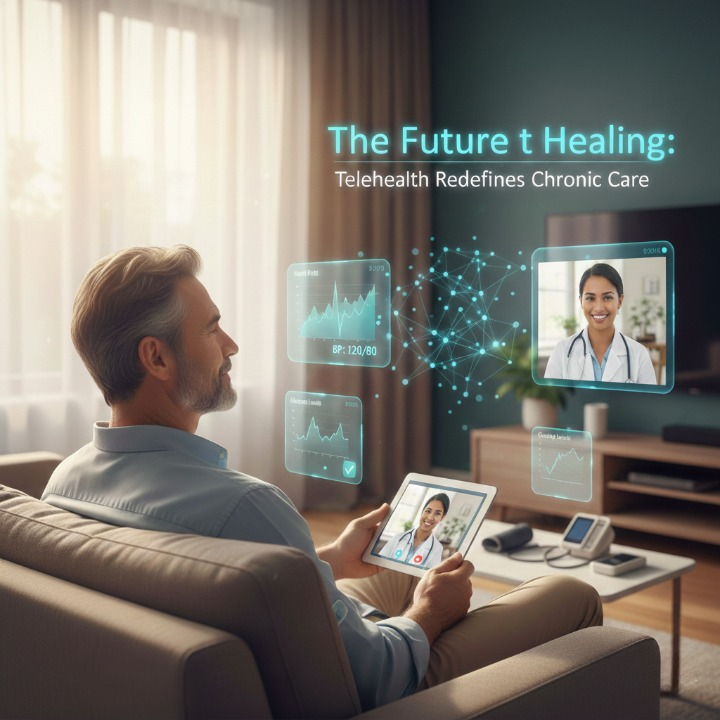
The Future of Healing: How Telehealth is Redefining Chronic Care
The Healthcare Revolution in Your Pocket
Healthcare is going through a massive change. For decades, the model was simple but slow. If you were sick, you went to a building called a clinic. You waited for hours. You spoke to a doctor for ten minutes.
Then you went home. For people with chronic conditions, this was a life sentence of travel and waiting.
But today, things are different. The walls of the hospital are coming down. Telehealth is the tool making this happen. It is more than just a video call.
It is a new way to live a healthy life without being tied to a waiting room. This technology driven approach promises to make healthcare more efficient, accessible, and personalized.
Understanding the Chronic Care Crisis
Chronic diseases are the long-distance runners of the medical world. They don't just go away. Conditions like diabetes, hypertension, and heart disease stay with you for years. They require constant watching and regular care.
According to the Centers for Disease Control and Prevention (CDC), chronic diseases are the leading cause of death and disability worldwide. In the United States alone, they account for 7 out of every 10 deaths.
Managing these conditions traditionally involves frequent in-person visits, lifestyle changes, and regular health monitoring.
However, this old model is inefficient and costly. Long wait times and travel costs create barriers for many patients. This is why telehealth has emerged as a vital tool for managing long-term conditions.
1. Convenience and Total Accessibility
The biggest win for telehealth is how easy it makes life. It removes the physical barriers between you and your doctor.
Goodbye to the "Zip Code" Barrier
In the past, your health depended on where you lived. If you were in a rural area, a specialist might be four hours away. Telehealth erases that distance. You can now access world-class doctors via video calls or secure messaging. This helps eliminate challenges for elderly or disabled patients.
Saving Your Most Valuable Asset: Time
Time is something we can never get back. A traditional doctor visit can take half a day. Between driving, parking, and waiting, the actual medical part is very short. Telehealth gives you that time back.
A study found that telehealth significantly improved patient satisfaction by providing convenient access. Patients feel more empowered when they can access care without disrupting their daily routines.
2. Remote Monitoring: The Silent Guardian
Remote patient monitoring (RPM) is the "heart" of telehealth for chronic care. It involves using devices like blood pressure cuffs or smartwatches to collect real-time data.
Data Driven Decisions
Instead of one blood pressure reading every three months, your doctor now sees a daily trend. This allows for early detection of health issues.
For example, a diabetic patient can use a continuous glucose monitor (CGM) to track sugar levels. The data goes straight to the doctor, who can make real-time adjustments to medications.
Proven Success
The American Telemedicine Association (ATA) states that remote monitoring improves clinical outcomes. it also reduces hospital readmissions and decreases the overall cost of care.
For conditions like hypertension, regular monitoring can prevent a heart attack or stroke.
3. Privacy and the Transformation of Sensitive Care
Chronic diseases often lead to secondary issues that are hard to talk about. Conditions like diabetes or high blood pressure can impact blood circulation throughout the body. For many men, this leads to sexual health complications.
In a traditional clinic, many patients feel embarrassed to bring this up. They worry about being overheard or judged. Telehealth provides a private and secure environment. This privacy has made it much easier for people to seek professional treatments for erectile dysfunction.
When a patient can consult from home, they are more honest about their symptoms. This honesty leads to better medical advice.
Doctors can now guide patients toward safe and modern solutions, such as fast-acting sildenafil, which can greatly improve their quality of life. By removing the stigma, telehealth ensures that no part of a patient's health is left untreated.
4. Moving Toward Continuous and Personalized Care
One of the biggest flaws in old-school medicine was the "gap" in care. Patients would see a doctor and then be on their own for months. Telehealth bridges this gap.
A Constant Connection
In cardiovascular care, patients need regular monitoring. Telehealth allows for frequent consultations to assess symptoms and modify plans. This continuous model reduces the chance of complications.
What the Research Shows
A 2021 study in the Journal of the American College of Cardiology showed that virtual visits improved outcomes for heart failure patients.
These patients had better adherence to treatment and fewer hospitalizations.
Similarly, a study in the British Medical Journal found that telemedicine for diabetes led to a significant reduction in HbA1c levels.
5. Breaking the Financial Burden
Chronic disease is expensive. Not just for the healthcare system, but for the individual. Telehealth helps lower these costs in several ways:
Lower Travel Costs: No gas, no parking fees, and no tolls.
Work Productivity:
You don't have to take a full day off work. A 20 minute video call is all it takes.
Preventative Savings:
By catching problems early through monitoring, you avoid the massive bills of an Emergency Room visit.
6. The Challenges: What We Must Overcome
We must be honest about the barriers to telehealth. Access to technology is the biggest issue.
Not all patients have smartphones or reliable internet. This digital divide is very visible in rural or underserved areas.
Privacy is another concern. While platforms are generally HIPAA compliant, some patients still worry about sharing data online.
We must use strong cybersecurity and educate patients on how their data is protected.
7. The Future: AI and the Internet of Medical Things
The future of telehealth in chronic care looks very promising. Soon, platforms will use artificial intelligence (AI) and machine learning.
AI can analyze data in real-time and predict a health risk before it happens.
We are also seeing the rise of the Internet of Medical Things (IoMT).
Imagine a bathroom mirror that checks your pulse or a bed that monitors your sleep quality. All this data will go to your doctor, creating a seamless safety net.
8. Why This Matters to You
At its core, telehealth is about giving power back to the patient. It takes the stress out of being sick.
It makes managing a condition feel like a part of life, not a burden on life.
Whether you are managing a heart condition or looking for the best treatments for erectile dysfunction, you now have the tools to do it on your terms.
You are no longer just a "patient" waiting for a turn; you are an active partner in your own health journey.
Conclusion: A New Era of Healthcare
Telehealth is not just a trend; it is a fundamental shift in how we deliver care.
It offers convenience, real-time monitoring, and personalized support.
It helps patients take control of their health in ways that were once unimaginable.
As technology evolves, telehealth will become even more important.
It will offer even more innovative solutions and improve the quality of life for millions of people worldwide.
The future of medicine is here, and it is right in your home.